A Bus Freezing to
Death
2026 | Video games, bus auto parts, scaffoldings, a CRT, essential electronics and accessories
This
project reconstructs the body of a dead bus and its final freezing memory as a person. It anticipates rising existential crisis when AI accelerates to create new forms of economy, and
simulation becomes indistinguishable from human
consciousness. The project avoids direct AI use, while recognizing human subjectivity in this technology’s history. Confronting the agency of the invented tools, the artist proposes a new ontology, where human
integrates with the machine on the conscious level.
Dash!
バスター!
2026
|
Cosplay
mega man helmet, motors and mechanism
The helmet belongs to Mega Man — a
self-conscious cyborg from the video game Mega Man X(1993). In the
installation, Mega Man dashes and バスター,
the Japanese word for buster, in game it refers to the firing of its cannon.
The machine performs heroism without a hero, plays games without a player, enacting
the pleasure that persists after the subject has left the room.
How I Become a
Punch Card
2024
|
8
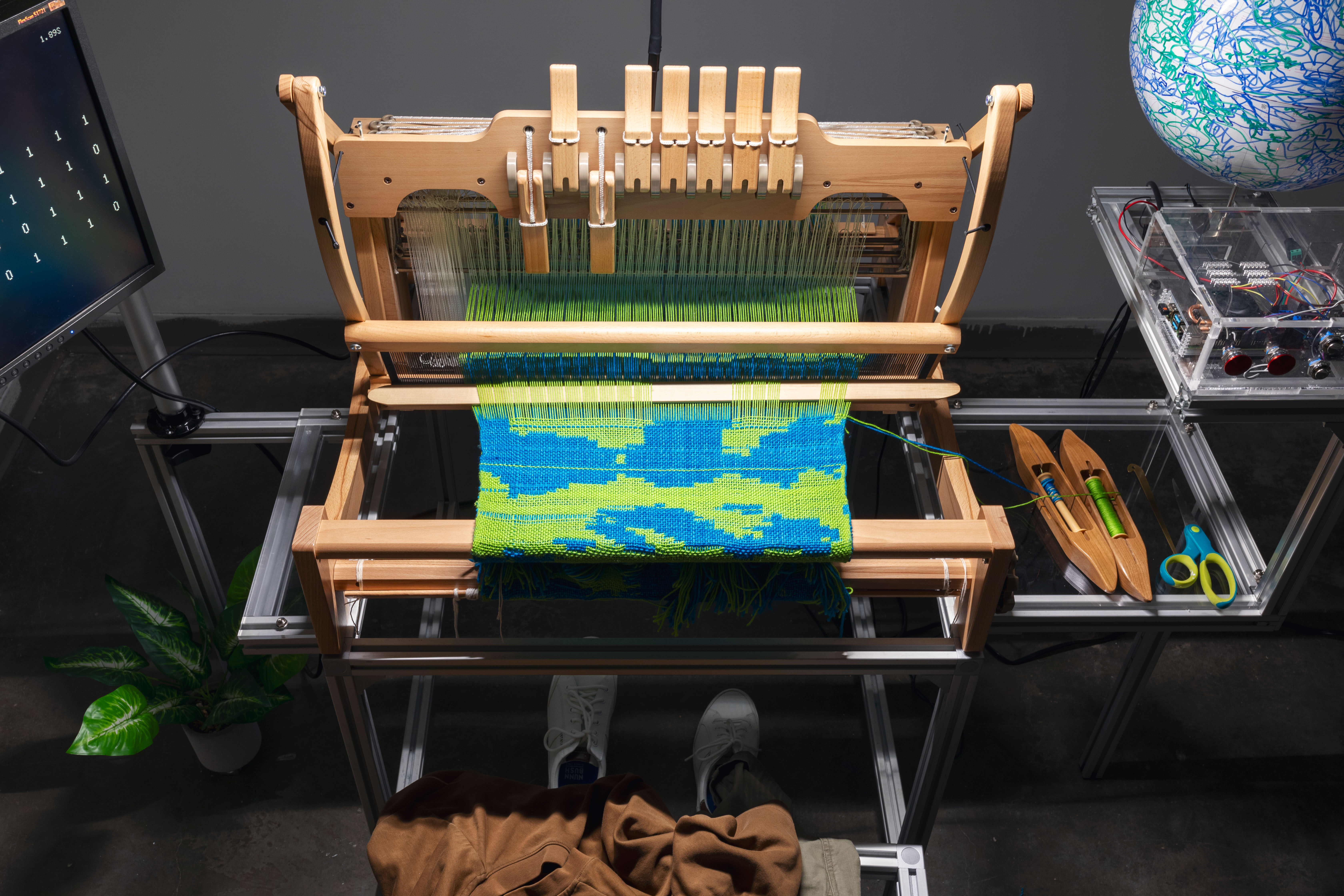
shaft table loom, algorithm, workstation, globe, work
suits, essential electronics
How I Become a Punch Card delineates a feedback loop between the earliest
and the latest machine considered as computers, activated by a human medium as
a necessary gear.
The algorithm perpetually generates maps and delivers weaving instructions with text, and binary codes. They are translated onto the weavings by a human loom operator, who redraws globe as an after-work diary.
The role of humans as the dominator, and machine as the subordinate has been reshuffled, switched over, their minds collide.
Spiritual Play: The Crusades
2023
|
multi-media installation
Spiritual Play: The Crusades is a
multimedia installation that combines cartography, collections of badges,soundscape, text pieces, and kinetic
sculpture, with an intense focus on videogame and its spiritual dimensions. Referring to the Crusades, a spiritually driven military pilgrimage, a conquest to
the religiously different other, this project invites the audiences to play the role of a pilgrim. While
telling this story about the journey of pilgrimage to themselves, they become
the other as opposed to their identityin reality, and experience spirituality in
games without becoming a believer of specific religion. Built on Johan Huizinga’s articulation of war as a form of play, the ludic
identity construction theory from Playful Identities, and Stef Aupers’ spiritual
play theory, the project examines these theories in practice. This project is
fueled by my interest in the video game Europa Universalis IV and the Crusades King V,
games that prominently feature map as projections of players’ desire to conquer. Similarly, my project began as a mapping endeavor to provide the
instruments for playful readings and fantasizing.
The first map I made was Antioch City Plan. This map is part of a greater cartographic endeavor to map all the strategically and relighiously significant cities during the Crusades, and their surrounding topography. I began by training myself to be a soviet Union military cartographer, and simultaneously explore the specifc way they encode human-inhabited space, to contemplate the topics of war, spirituality, nationlism, knowledge system, and fictional narratives.
![]()
Man Who Conquered The World From His Apartment
2023
|
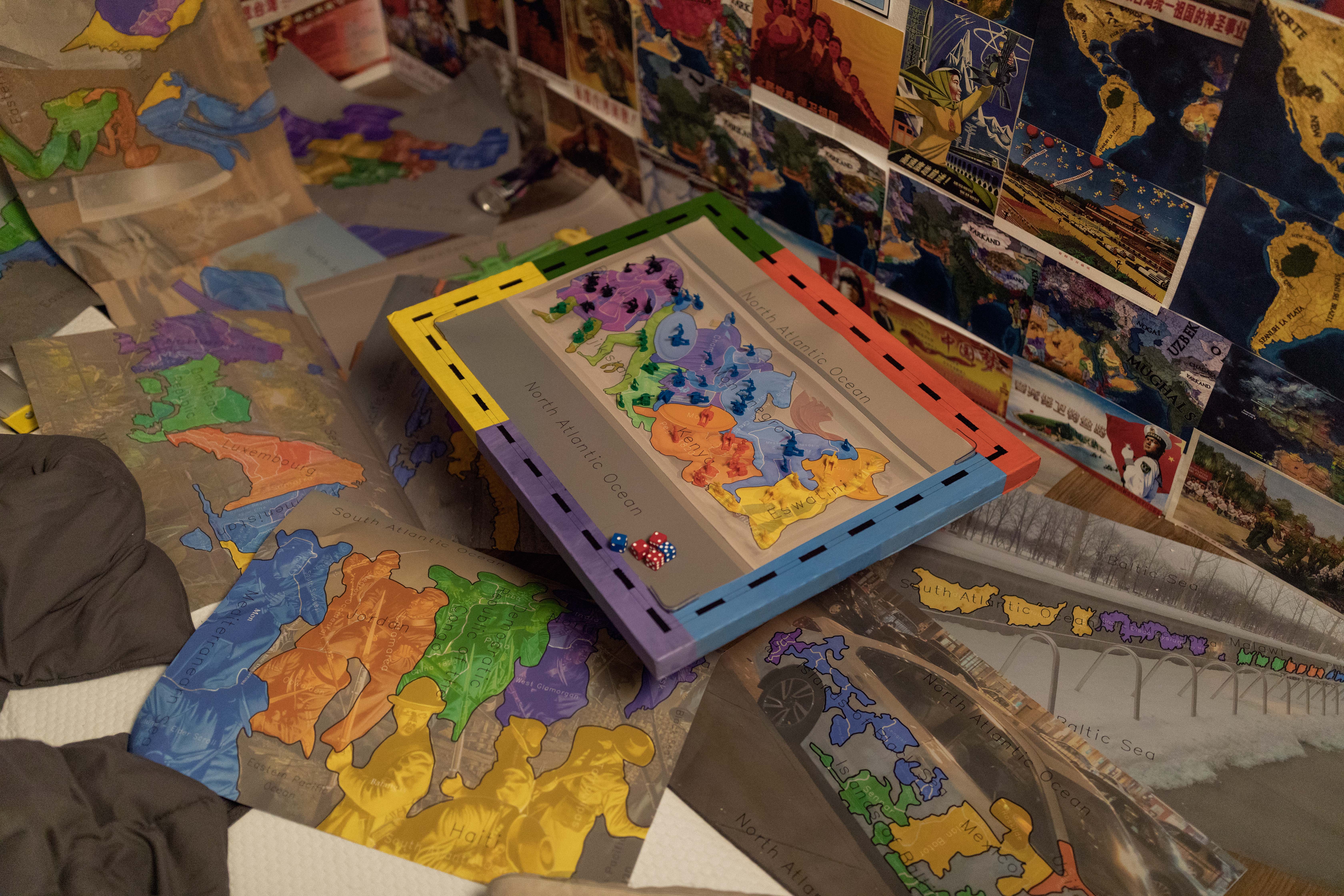
Algorithm, posters, board game set, bed set, binoculars, pizza, waste tin can, ladder, iPad, printer
The Ant and The Grasshopper
2022
|
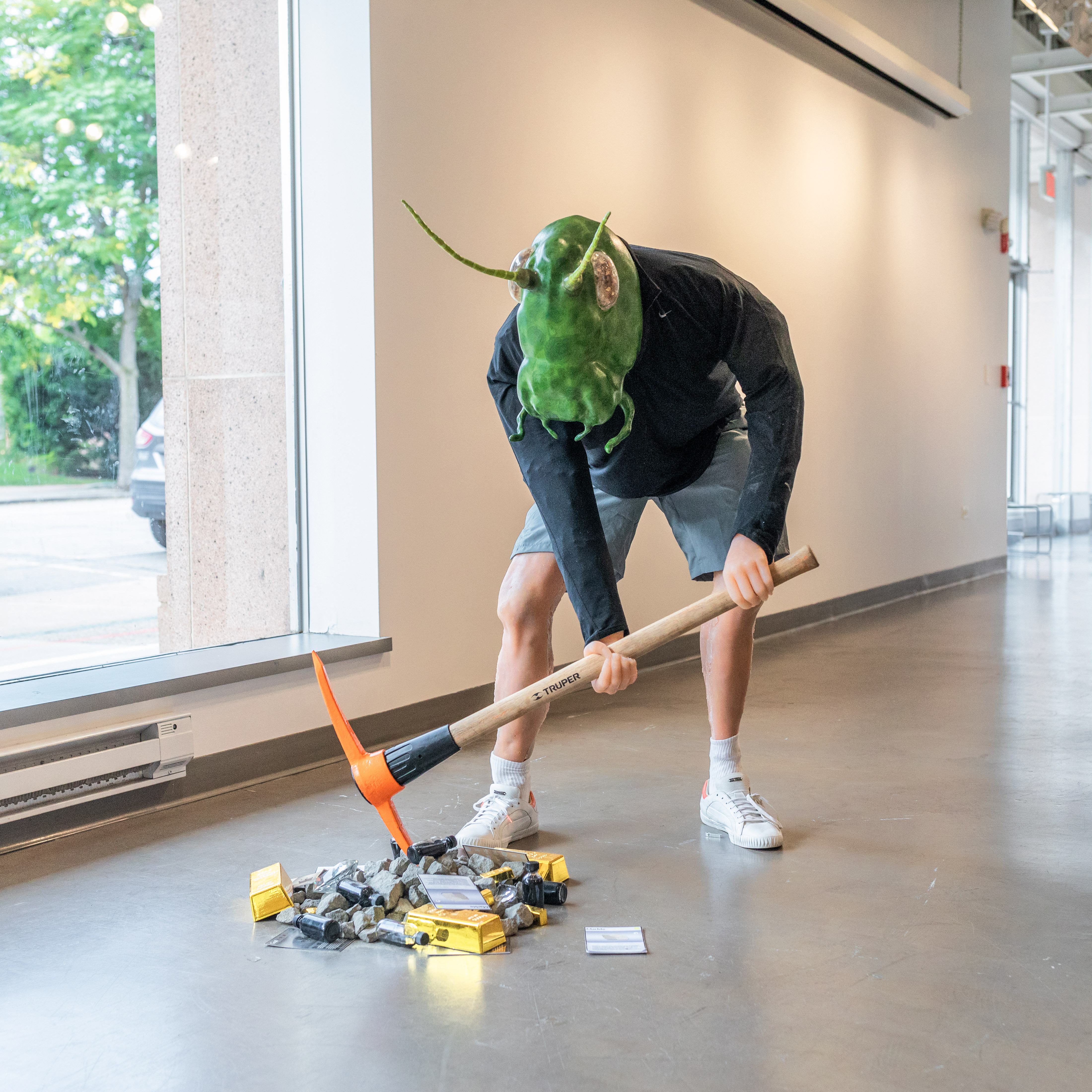
3D printed grasshopper head, found clothing, found pickaxe,
silicone skin, concrete, wires, gold bar, quarry stone, diamond, petroleum,
trading card(lumber, coal, marble)
The Ant and The Grasshopper attempts to define the word
“play” and confront the accompanying anxiety concerning the ideal of existence
for society and individuals. The installation depicts a resident of an imagined
utopia; a utopia theorized by Bernard Suits in 1978, in which all needs for
instrumental and productivity are satisfied, and the only thing left for humans
to do is to play games. When games are fabricated and made-believe as all the
activity used to be driven by economic needs and social growth, the distinction
between labor and game becomes inexplicit and even interchangeable.
The grasshopper in this project refers to
the one in the story of The Ant and the Grasshopper by Aesop, yet presents
another interpretation. Instead of being lazy and shortsighted, this
grasshopper resembles someone in disguise playing a game without knowing it,
who therefore believe game playing to be the essential life of the grasshopper.
![]()